Austria bans glyphosate in its vineyards. You pour a glass of Austrian Grüner Veltliner these days and something feels different. Cleaner, maybe. Brighter. A little more alive on the tongue. From 1 January 2026 that feeling will no longer be an accident. This way Austria becomes the first EU country to completely ban glyphosate in every single vineyard, organic or conventional. No exceptions. No extensions.
I know what some of you are thinking: “Here comes another regulation.”
This one is different. It did not arrive with shouting or panic. It arrived quietly, steadily, and with almost everyone in the room agreeing. Almost everyone. That alone deserves a closer look.
What Exactly Happens on 1 January 2026
Simple and clear, any herbicide containing glyphosate becomes illegal on Austrian vines. The rule covers every hectare, from the steep terraces of Wachau to the wide plains of Burgenland. Actually even the smallest family winery must comply. The decision was signed into law in July 2025 after six years of preparation. No one can say they were surprised.
A Full Glyphosate Ban Isn’t a Game – How Austria Pulled It Off
Austria started cutting glyphosate long before the final ban. As early as 2019 the country restricted it heavily and handed growers money to test alternatives. Researchers measured soil health., winemaker associations ran field days. Young producers shared photos of sheep grazing between the rows and cover crops flowering under the vines.
Everyone learned together. By 2024 more than 70 % of Austrian vineyard area was already glyphosate-free. The last 30 % now have clear roadmaps, subsidies, and machinery loans. The government never had to force anyone. They simply removed the easy option and made the better one affordable. Win-win.
Life in the Austrian Vineyards Right Now, Without Glyphosate
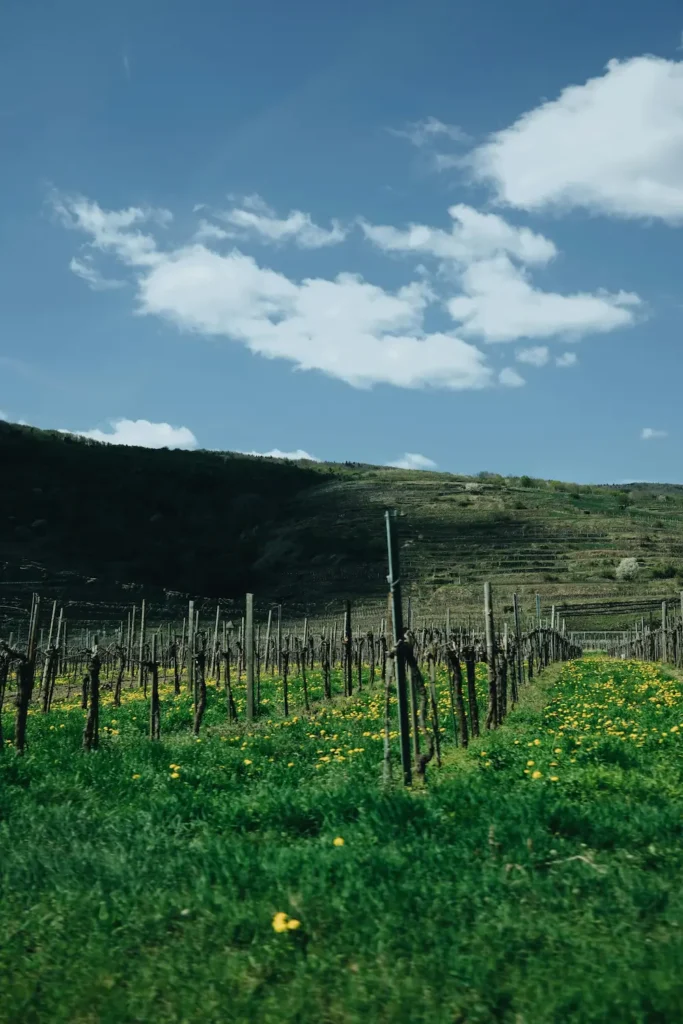
Walk through Burgenland today and you see electric straddle tractors with finger weeders. In Styria, narrow machines roll slowly, brushing weeds instead of spraying them. Some growers let chickens loose in winter. The scenery sometimes looks quite surreal, but it definitely works. Others sow clover and radish between the rows. The soil smells and looks like soil again, not chemistry.
Winemakers keep telling the same thing: the vines look healthier. Bud break is more even. Yields are stable. And yes, the fruit tastes cleaner.
Is that just an illusion? Scientists remind us that the tongue only senses chemicals, the brain does the “tasting”. So if your brain says the wine tastes cleaner, is it still an illusion? Or is it the new reality? I’ll let you decide.
One grower in Carnuntum laughed and said, “I used to spray once and forget. Now I drive past my vineyard almost every day and actually look at it. Turns out that’s not a bad thing.”
The Bigger Picture for Austrian Wine Quality
Healthier soil means more active microbes. More active microbes mean more complex nutrients for the vines. Many producers already notice sharper acidity, clearer varietal character and longer finishes. These are tasting notes from the 2024 and 2025 vintages, harvested without glyphosate.
And let’s be honest: glyphosate is bad. Really bad-bad. It is a hardcore poison, and getting rid of it across an entire sector, in an entire country, is a big deal. Not instant heaven, but almost.
Will every bottle suddenly become revolutionary? Of course not. But the ceiling just got higher, and the floor is now the cleanest in Europe.
How The Glyphosate Ban Positions Austrian Wines Globally
Buyers in New York, Stockholm, Tokyo and London already write “glyphosate-free” on their spec sheets. From January onwards, every Austrian bottle can answer yes without extra paperwork or cost. That is a competitive advantage few countries can copy overnight.
Importers are already increasing their 2026 and 2027 allocations. Restaurants proud of their sustainable lists are adding more Austrian sections. The message has never been simpler, if you want European wine made without the world’s most debated herbicide, look to Austria first.
What Winemakers Elsewhere Can Learn
Making great wine without glyphosate does not need a revolution. It only needs time, funding for alternatives, and honest conversation between growers and government. Austria just proved the model works at national scale. Other wine countries are already taking notes.
What a Glyphosate Ban Means for The Wine Buyers
- From 2026 every Austrian wine is glyphosate-free by law
- Most producers are ready, the rest receive real support
- Expect even more precise, vibrant Austrian wines in your glass
- “Clean” is now the default, not the expensive extra
- If you buy or sell wine, update your pitch: Austria now leads Europe on this issue
Austria did not ban glyphosate to win headlines. It banned glyphosate because the vines, the soil, and more importantly, the people who work them deserve better.
Starting next year, every bottle one open from Austria will carry that promise.
Raise a glass to that!
Featured image by Sebastian Schuster